The American Institute of Building Design (AIBD) is a professional association that promotes the highest standards of excellence in residential building design.
AIBD offers a variety of resources to its members, including continuing education, networking opportunities, and marketing assistance.
AIBD is a valuable resource for anyone interested in a career in residential building design. If you want to improve your skills, network with other professionals, and stay up-to-date on the latest trends, AIBD is the perfect organization for you.
Share
Architecture’s hidden dialogue: The language of space [Midweek Meander]
Published about 4 hours ago • 6 min read
Hello Reader,
Congrats on surviving Monday and crushing Tuesday.
Now, Wednesday beckons you to take a break and step into a pattern of discovery.
Did someone forward this to you? Please consider subscribing.
There are times in design history when a single voice doesn’t just respond to the world—it quietly reshapes how we understand it. Richard Joseph Neutra was one of those voices. Born in Vienna on April 8, 1892, Neutra’s early life was framed by a Europe in transition—intellectually vibrant, yet politically unstable. He studied architecture in a culture steeped in philosophy, psychology, and the arts, influences that would follow him across the Atlantic. But his story is not simply one of migration; it is one of translation. When Neutra arrived in the United States, he didn’t just bring the principles of the International Style—he reinterpreted them through the lens of human experience, climate, and, perhaps most profoundly, health. At a time when modernism was often criticized for being cold, rigid, or overly mechanical, Neutra was asking a very different question: What does the human body actually need to thrive? This question led him to develop what he called “biorealism,” a concept that feels remarkably contemporary, even urgent. Long before “evidence-based design” became a professional standard, Neutra argued that architecture must respond not only to function and form, but to biology and psychology. He believed that buildings should support the nervous system, reduce stress, and enhance well-being. In his view, a home was not a static object—it was an active participant in human life. And perhaps nowhere was this more evident than in his work in California, where he helped shape what we now recognize as California Modernism. Here, the environment became both collaborator and teacher. Large expanses of glass dissolved the boundary between inside and out. Overhangs and orientation responded to sun angles. Breezeways encouraged natural ventilation. These were not stylistic gestures—they were physiological ones.
Kaufman House, by Richard Neutra. The same Kaufman who commissioned Fallingwater(TM).
Neutra understood something that we are only now beginning to quantify: that light regulates circadian rhythms, that air quality affects cognition, that spatial proportion can either calm or agitate the mind. His homes were not simply beautiful; they were calibrated. But this sensitivity did not emerge in a vacuum. Neutra’s personal life carried its own tensions and complexities. He was known to be intensely driven, sometimes to the point of friction with clients and collaborators. His partnerships—most notably with Rudolf Schindler—were marked by both creative synergy and eventual rupture. And yet, even within these challenges, there was a relentless commitment to the idea that architecture mattered deeply—not just as an art form, but as a force that could shape human health and happiness. It is easy, in hindsight, to see Neutra as ahead of his time. But perhaps it is more accurate to say that he was deeply of his time, just paying attention to the right signals. He absorbed emerging ideas in neuroscience, psychology, and environmental science, and translated them into built form. He listened—to clients, to landscapes, to the body itself. That act of listening feels particularly relevant today. At the recent New York Build event, the American Institute of Building Design had the opportunity to lead a conversation that, in many ways, echoed Neutra’s philosophy. The session centered on the concept of the “Language of Space,” a framework that challenges us to think beyond square footage and finishes, and instead consider what our designs are communicating. Because residential environments do more than shelter occupants—they speak. Through scale, proportion, light, acoustics, materials, and spatial organization, homes influence how people feel, function, and live their daily lives. A narrow hallway can create tension. A well-placed window can offer relief. The texture of a material can evoke warmth or sterility. These are not abstract ideas; they are lived experiences. What made the conversation particularly compelling was its emphasis on balance. Effective residential design must meet measurable performance criteria—accessibility, ergonomics, safety. These are non-negotiable. But equally important are the emotional outcomes: a sense of security, belonging, restoration, and identity. This is where Neutra’s biorealism finds new relevance. In the workshop, real-world residential scenarios were used to demonstrate how designers can translate homeowner narratives into spatial solutions. Attendees were encouraged to listen more deeply—to identify the emotional drivers behind client requests. A desire for an open floor plan might reflect a need for connection. A request for a secluded office might signal a search for focus or refuge. These insights can then inform layout planning, lighting strategies, circulation design, and material selection. In other words, design becomes an act of interpretation. And when done well, it becomes an act of care. There is something deeply optimistic in this approach. It suggests that design is not just about solving problems, but about enhancing life. It invites us to see each project not as a set of constraints, but as an opportunity to create environments that support human flourishing. Neutra believed this deeply. He saw architecture as a bridge between the physical and the emotional, the measurable and the intangible. He understood that a home could reduce stress, foster connection, and even improve health outcomes—if designed with intention. Today, as we navigate a world that is increasingly complex and often overwhelming, this perspective feels more important than ever. We are more aware of mental health, more attuned to environmental impact, and more interested in how our surroundings shape our well-being. And yet, the fundamental question remains the same: Are we truly listening—to the people we design for, and to the spaces we create? Because at its core, design is a conversation. It is a dialogue between client and designer, between structure and site, between body and environment. And like any meaningful conversation, it requires attention, empathy, and a willingness to go beyond the surface. Neutra’s legacy challenges us to elevate that conversation. To move past the purely visual, and into the experiential. To consider not just how a space looks, but how it feels. To recognize that every decision—every line drawn, every material selected, every opening placed—has the potential to impact someone’s daily life in ways both subtle and profound. And perhaps most importantly, to remember that behind every project is a human story waiting to be understood. As we continue to push forward with new technologies, new materials, and new methods, there is a temptation to focus on what is possible. But Neutra reminds us to also focus on what is meaningful. Because the most innovative design is not always the most complex. Sometimes, it is the most human. So as you approach your next project, your next client meeting, or even your next walk through a familiar space, consider this: What is this environment saying? And more importantly— What should it be saying?
Brandon Clokey
Principal, Clokey Companies - Brandon G. Clokey Residential Design Internal Vice President, American Institute of Building Design Chairman, AIBD Conference Committee & ARDA Committee Email: Brandon@ClokeyCompanies.com
PS - The Neutra Institute for Survival Through Design, dedicated to exploring the intersection of design and human well-being, offers hours of free recordings. You can access a wealth of knowledge through their collection of past lectures, webinars, and interviews with leading experts in architecture, design, and environmental science.
Share the Meander with your friends! Just copy and paste this link to spread the word:
Any opinions expressed in this email are those of the authors or persons quoted and are not necessarily those of the AIBD.
One more thing—we want to lead with transparency. AI was used in the editing of this email.
American Institute of Building Design (AIBD)
The American Institute of Building Design (AIBD) is a professional association that promotes the highest standards of excellence in residential building design.
AIBD offers a variety of resources to its members, including continuing education, networking opportunities, and marketing assistance.
AIBD is a valuable resource for anyone interested in a career in residential building design. If you want to improve your skills, network with other professionals, and stay up-to-date on the latest trends, AIBD is the perfect organization for you.
Read more from American Institute of Building Design (AIBD)
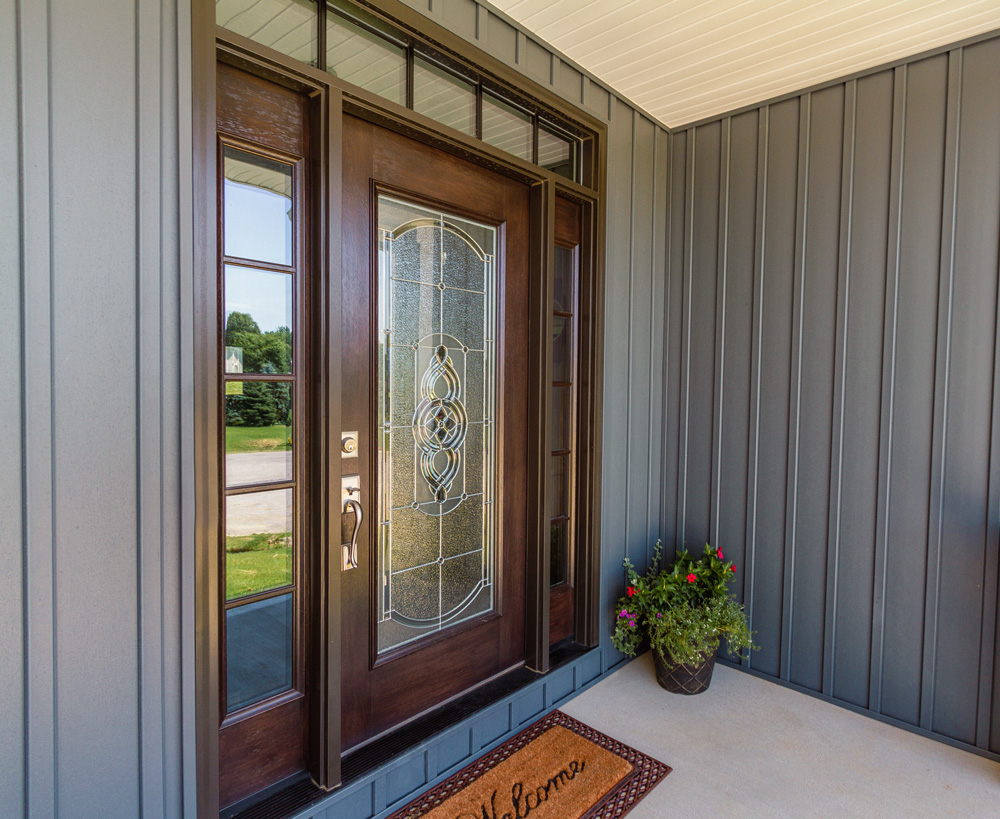
Preview How Light and Movement Affect Decorative Glass Decorative Glass Gallery Decorative window and door glass is a stunning upgrade that boosts the curb appeal of a home. Ornamental designs bring artistry to standard glass, and privacy glass allows light to filter in while obscuring the view. But the selection process can be challenging for your customers—flat images in a brochure cannot depict the way light, shadows, and movement affect the design's appearance. The ProVia Decorative Glass...
April 6, 2026, Edition #CreatingWherePeopleLive This weekly newsletter is created by and for those designing homes in North America. Its editorial staff is the American Institute of Building Design, Inc., the premier association of residential design professionals. Here's what you get: Field Notes Nuts & Bolts Highlights Workshops & Gatherings What We're Up To Amazing sponsors who help keep this newsletter free for the industry. Let's dive in. Email servers may truncate this newsletter...
You’re on this email list for a reason. You design, support designers, teach designers, or do business with them. And whether you’re just getting started, already established, or running a firm, if you’re on this list, there’s a membership level built for you at AIBD.org/join. Today, I want you to find your level, claim your benefits, and stop going it alone. AIBD isn’t just another association. It’s the professional home for the people actually doing the work of building design — and the...